

Villa EF: Architecture emerging from the slope on the eastern shore of Lake Garda
At the foot of the hills that define the eastern edge of Lake Garda, in a landscape marked by olive trees, cypresses and oleanders, a pattern of single family holiday homes developed during the twentieth century, scattered or grouped into small residential clusters. Within this context sits the renovation and extension of a 1960s villa overlooking the lake, designed by the Venice based studio De Paoli Franceschi Baldan, and executed with craftsmanship and technical precision by Gianfranceschi Costruzioni.
Architecture embedded in the slope
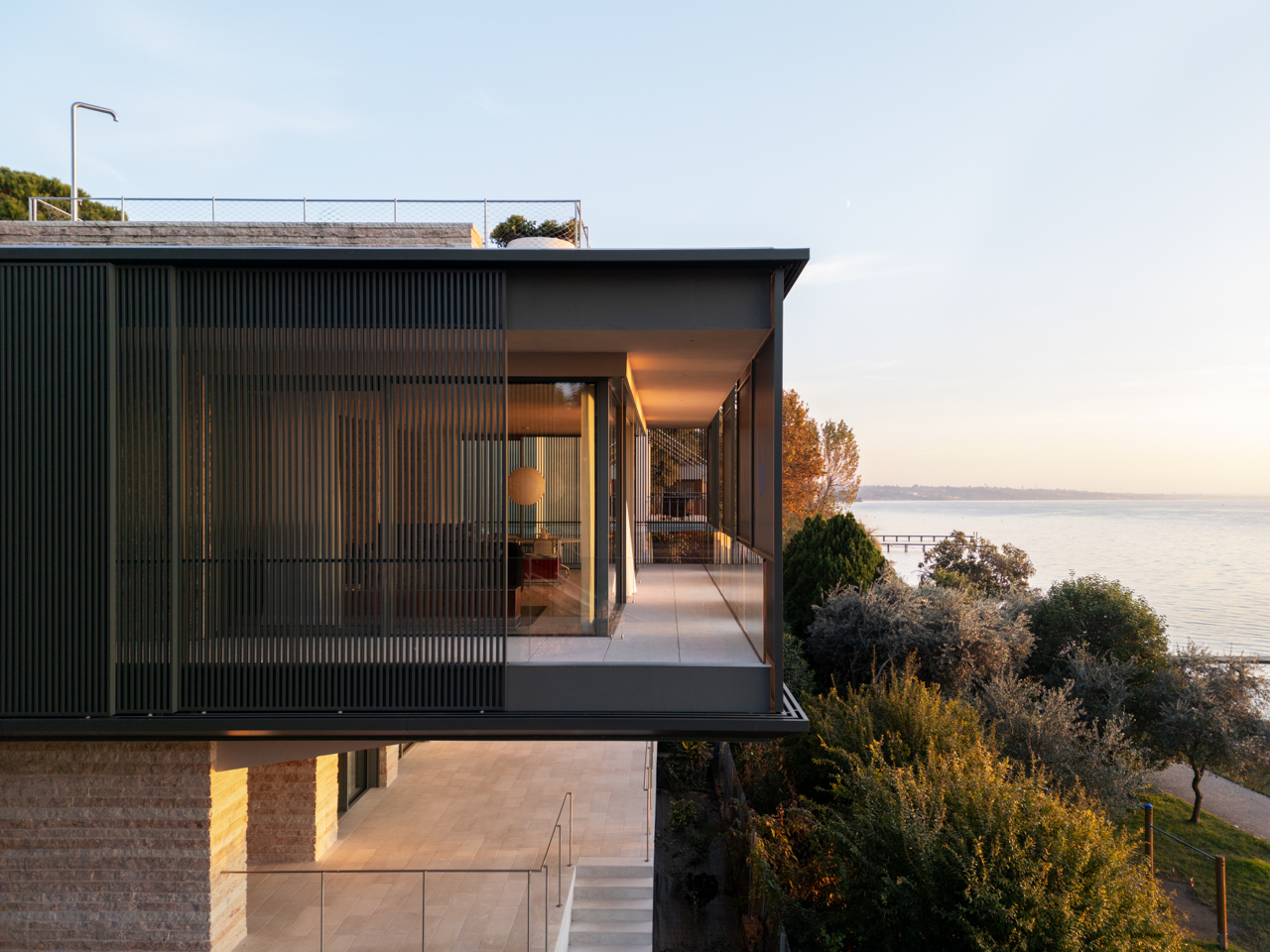
The project establishes a measured dialogue with the landscape, reinterpreting the existing building through a composition articulated into three volumes arranged over two levels and carefully integrated into the natural slope of the site. The main volume projects towards the lake, strengthening the visual relationship with the water, while a second recessed block introduces a more contained spatial sequence. The third element, created through the extension, is set against the hillside, completing the entrance courtyard.
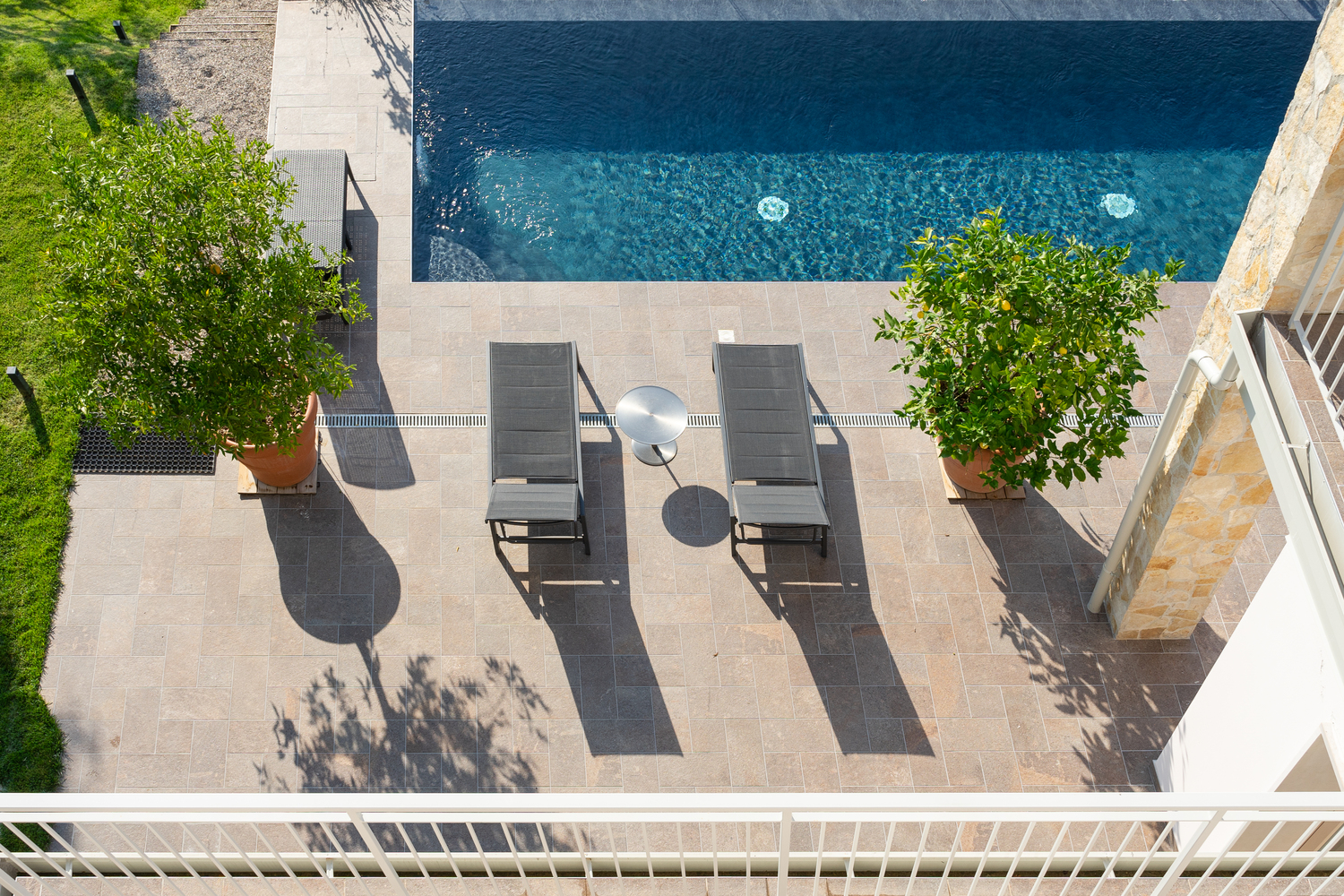
The shared living spaces of the two residential units open towards the lake through a fluid and adaptable sequence, accompanying the transition between interior and exterior. The architecture appears to emerge from the hillside and gradually dissolve through the use of large glazed surfaces and reflective materials, forming an ascending promenade that culminates on the roof, where the solarium and swimming pool are located.
Facade, light and material
The elevation facing the lake is conceived as a dynamic double skin, composed of movable panels that regulate environmental conditions and the relationship with outdoor spaces. The facade is wrapped by an openable loggia, where the large living room windows are screened by sliding brise soleil, allowing light control and visually lightening the volume of the upper floor.
The neutral and light tones of the materials echo the colours of the local stone and the natural shores of the lake. The cladding in pink Lessinia stone, laid in horizontal bands with a split finish, recalls the geological stratifications of the hillside and continues into the interiors, reinforcing the continuity between architecture and landscape. Brise soleil, window frames and metal elements adopt the same hue as the surrounding olive leaves, while the balustrades alternate glass panels with stainless steel mesh, referencing nautical solutions and ensuring visual permeability.
The project by De Paoli Franceschi Baldan delivers an architecture deeply rooted in its setting, while maintaining a contemporary and restrained language, balancing material, light and landscape.