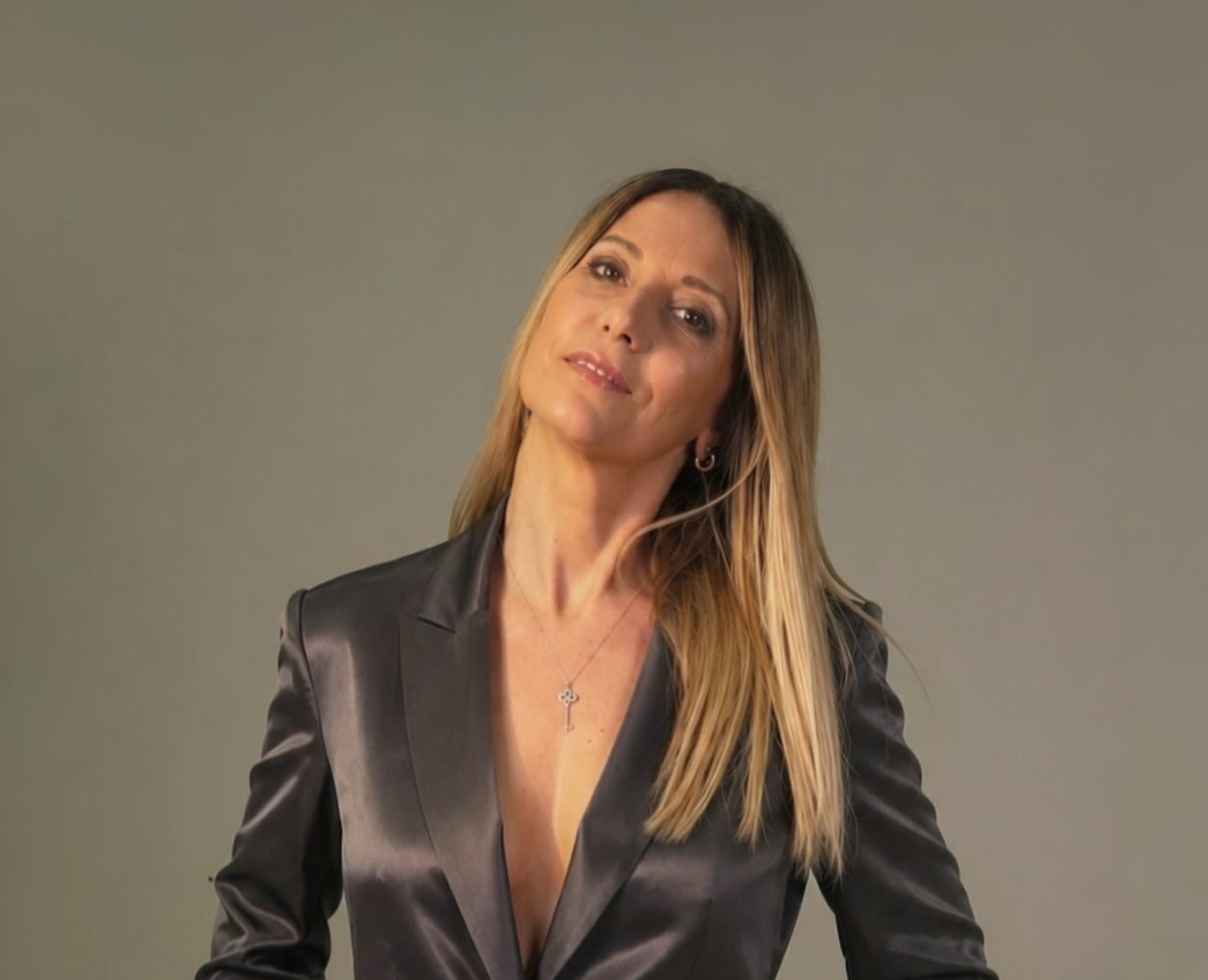
Nata ad Alicante e formatasi a Valencia, Beatriz Sempere ha trasferito nel 2000 la sua sensibilità creativa in Italia, dando vita a un percorso dove il rigore geometrico del design industriale incontra il calore del gusto mediterraneo.
Per la designer, l’ambiente domestico e la qualità dello spazio vivibile sono al centro di una costante ricerca di forme capaci di completare l’architettura degli interni mettendoci sempre l’uomo al centro. Il suo lavoro, guidato dall’esigenza di emozionare attraverso un’austerità progettuale nitida, romantica e funzionale, spazia dalla direzione artistica alla collaborazione con primarie aziende del settore.
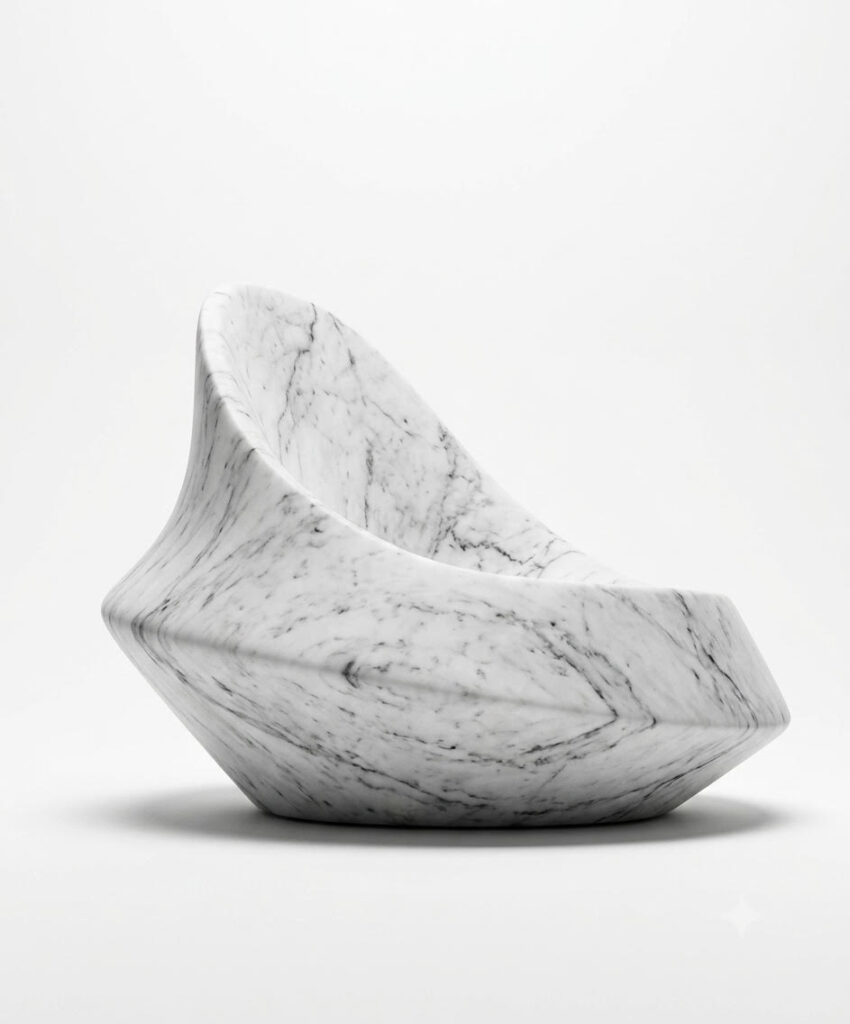
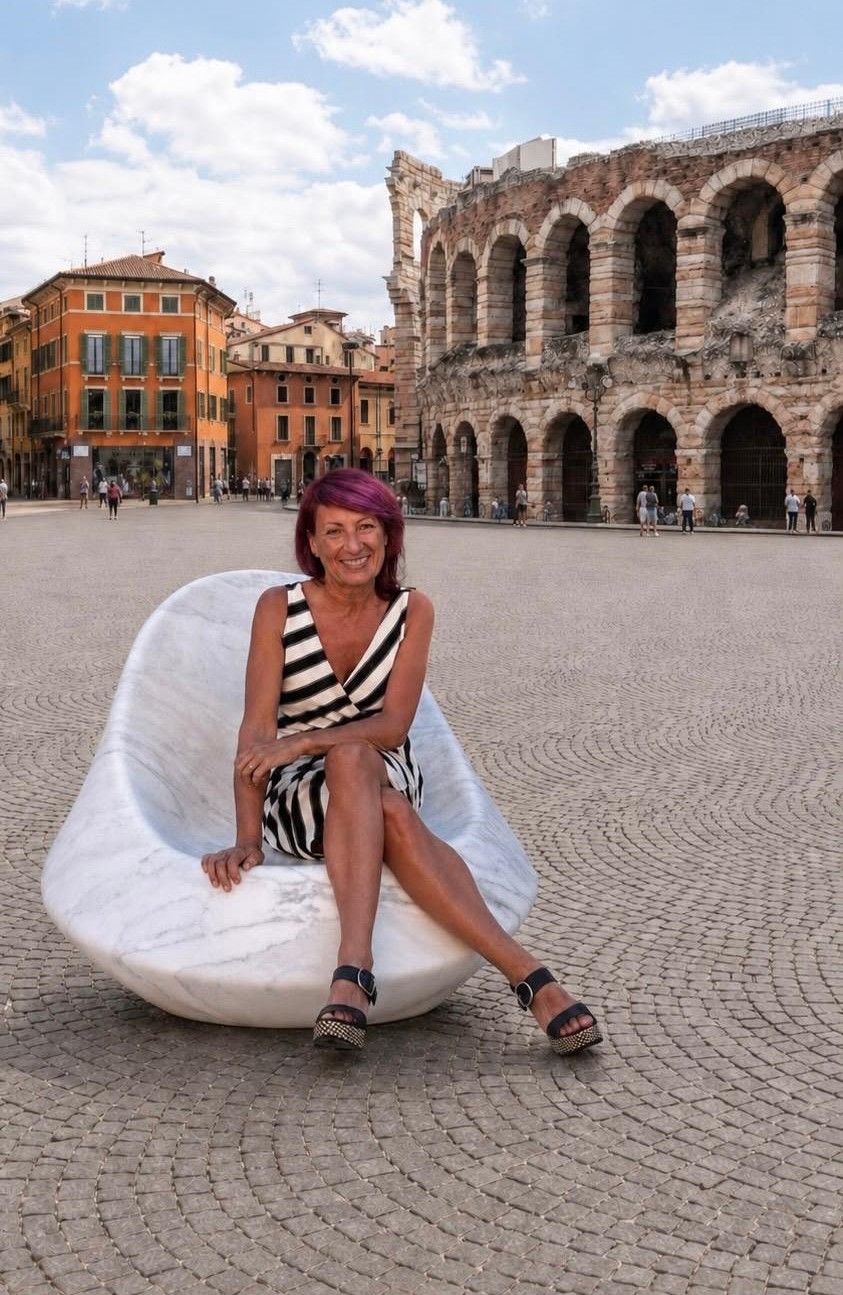
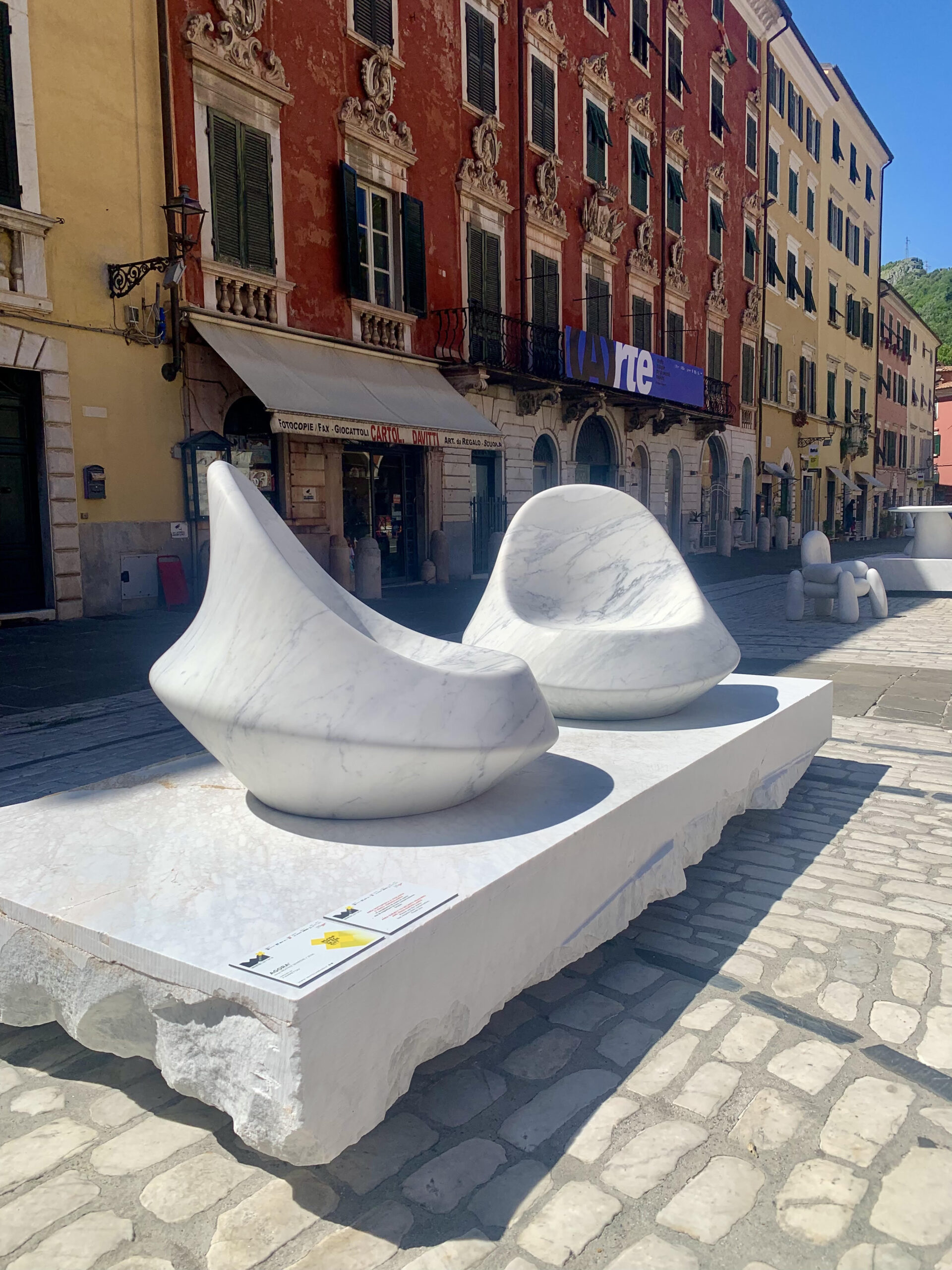
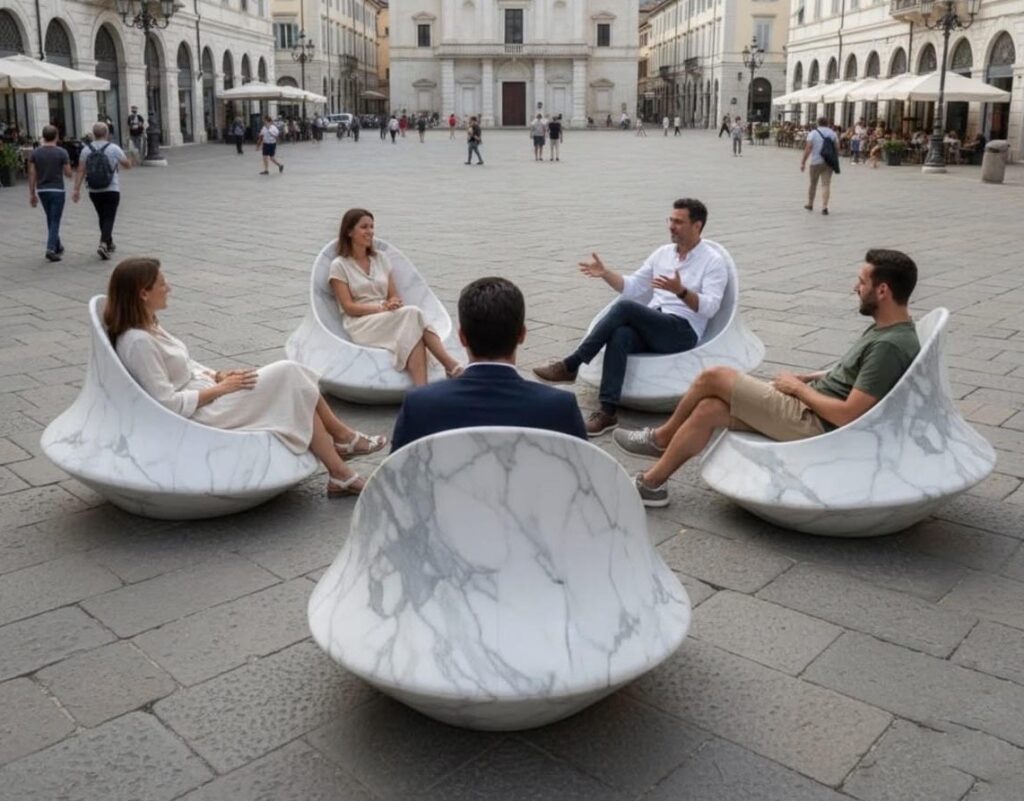
In occasione dell’installazione delle sue poltrone Agorà in marmo di Carrara in Piazza delle Erbe a Verona per Marmomac 2026, l’abbiamo intervistata per farci raccontare la genesi di un progetto pensato per trasformare la pietra da monumento a luogo di incontro.
1. Beatriz, partiamo dal tuo ultimo progetto: come nasce l’idea di realizzare una poltrona in marmo destinata agli spazi pubblici?
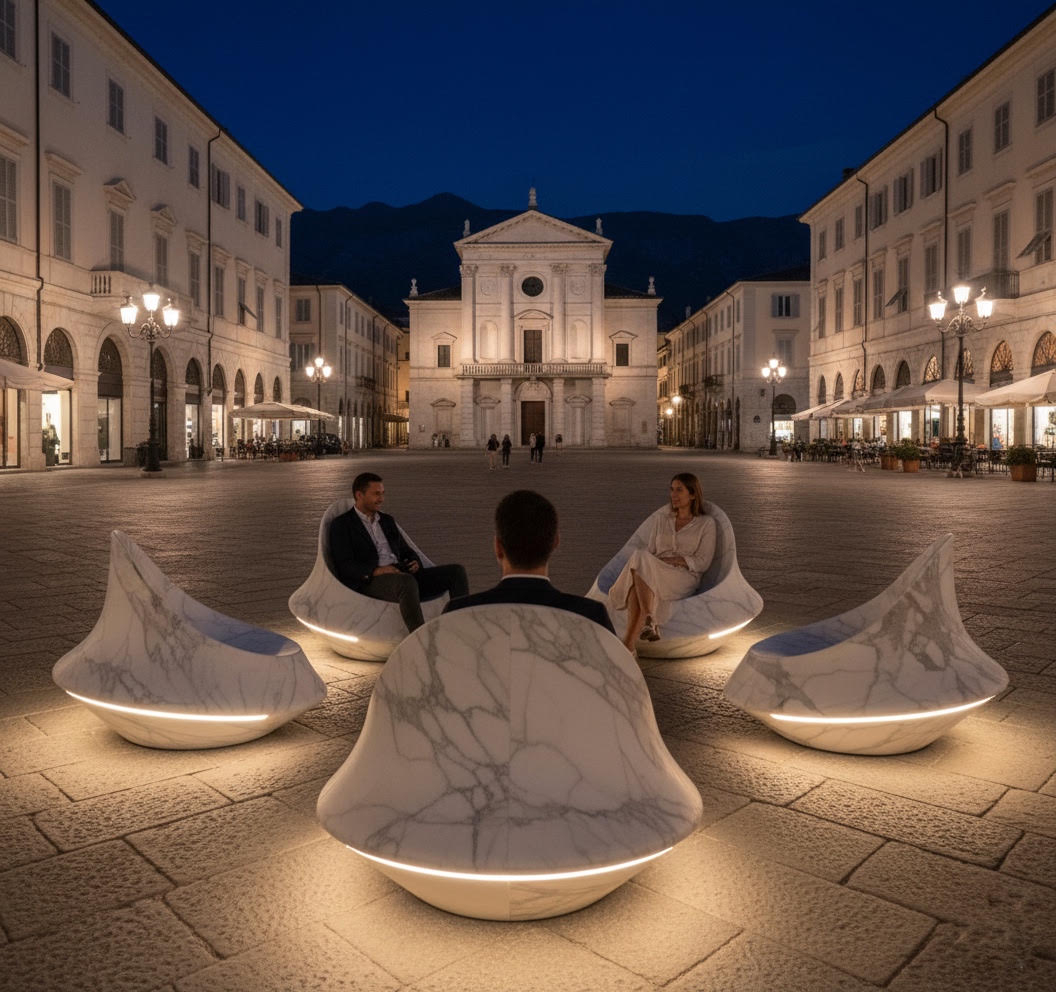
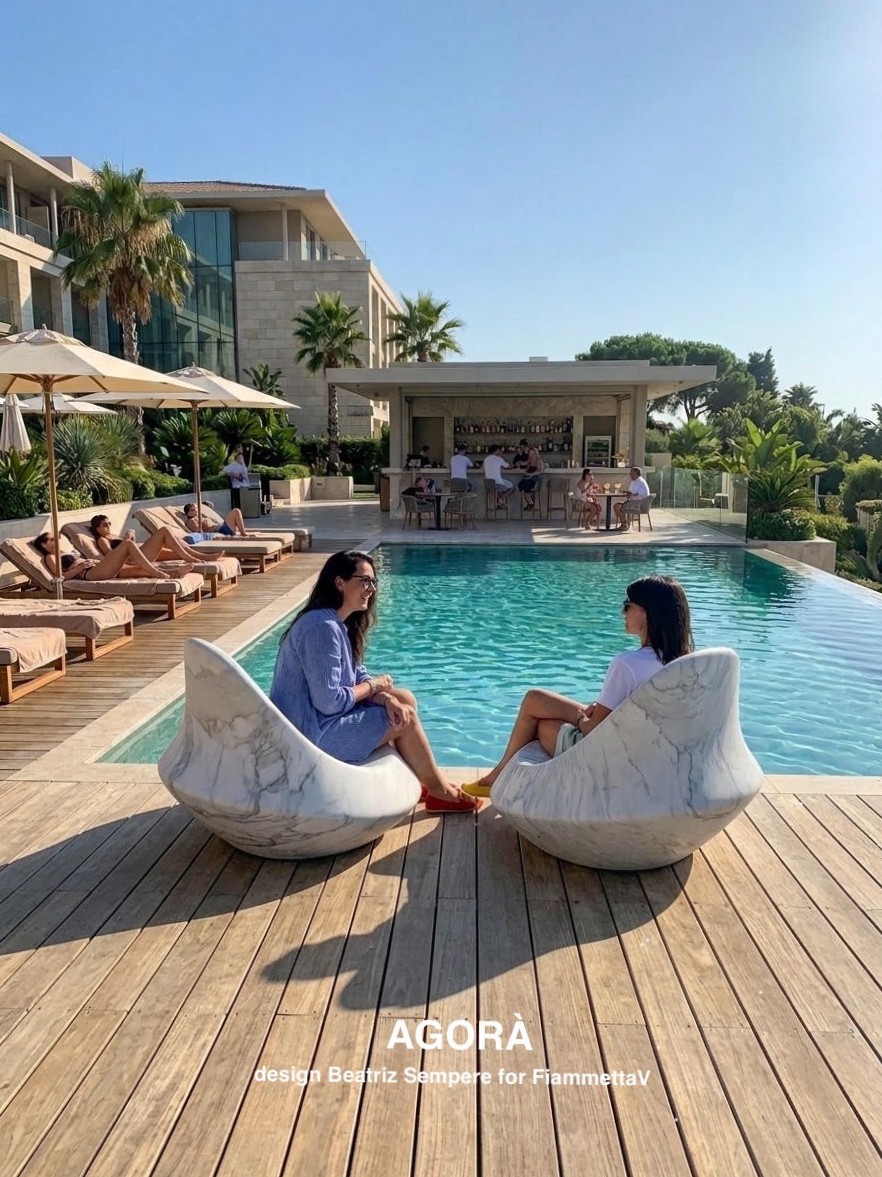
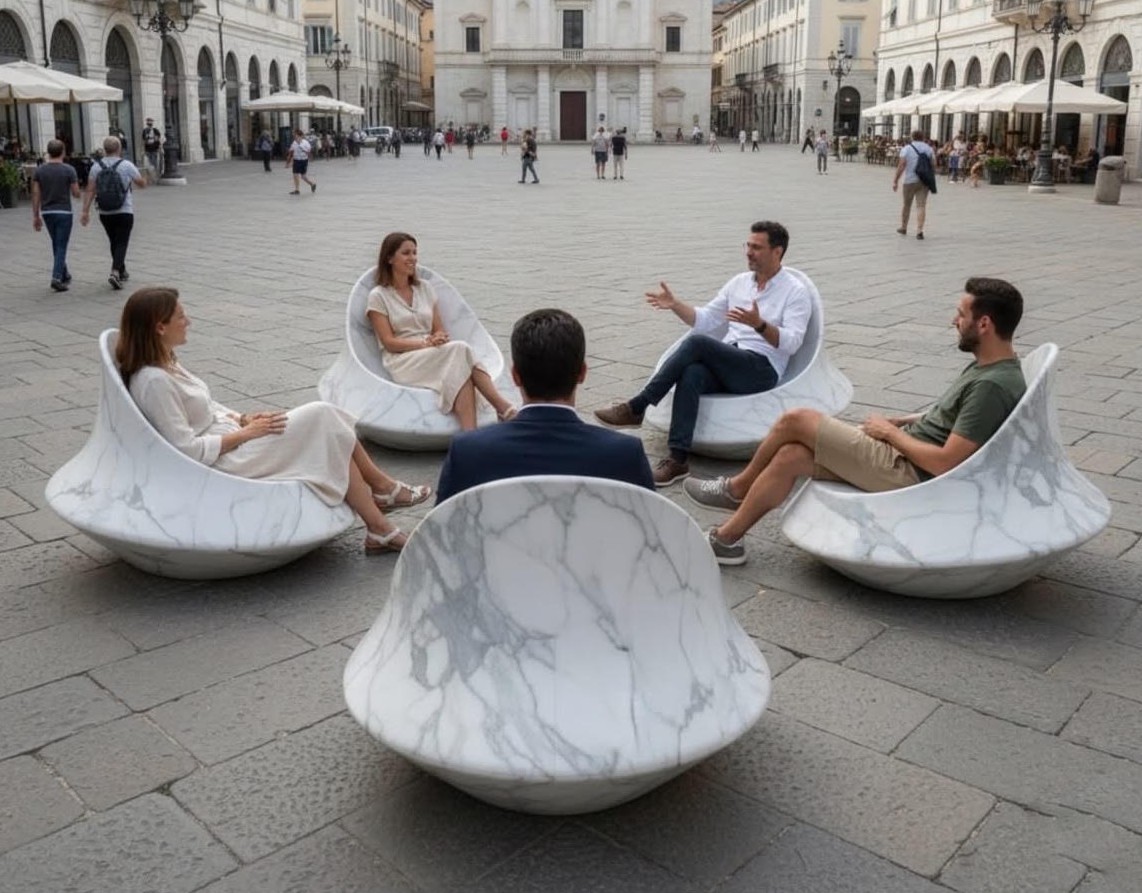
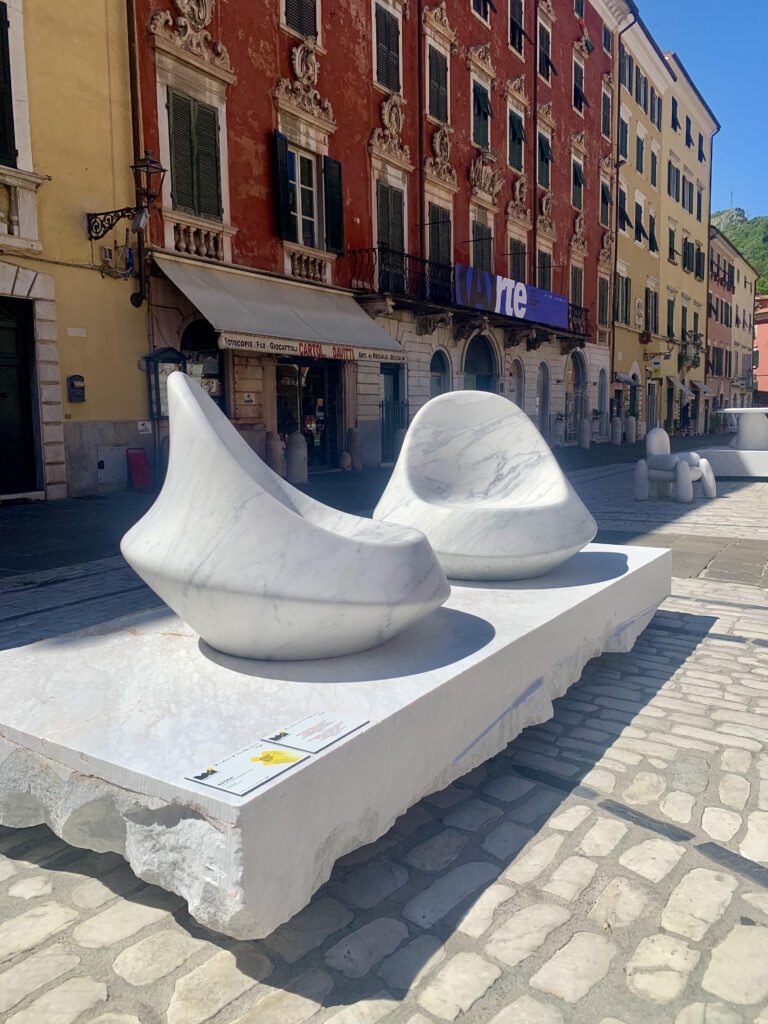
Agorà nasce da un desiderio molto semplice: creare un salotto all’aperto. Quando ho ricevuto l’invito a partecipare a White Carrara 2026, dopo anni in cui desideravo conoscere da vicino questo territorio, ho sentito che non volevo semplicemente progettare un oggetto in marmo. Volevo creare un luogo. Volevo mettere in relazione tutte le persone che rendono speciale questo progetto: la montagna, la materia, le aziende, gli artigiani, i designer, le persone di Carrara e i visitatori. Da qui è nata l’idea dell’Agorà, l’antica piazza come luogo di incontro, di scambio e di vita. Ho immaginato un cerchio di poltroncine dove potersi sedere, mettere via per un momento il cellulare e parlare. Di vita, di sogni, di viaggi, di lavoro, oppure semplicemente del più e del meno. Anche la forma della poltroncina nasce da questo pensiero: non è un oggetto pensato per stare isolato, ma per appartenere a un insieme.
2. Il marmo viene normalmente percepito come un materiale duro, freddo e monumentale. Come sei riuscita a trasformarlo in una seduta che comunichi accoglienza e comodità?
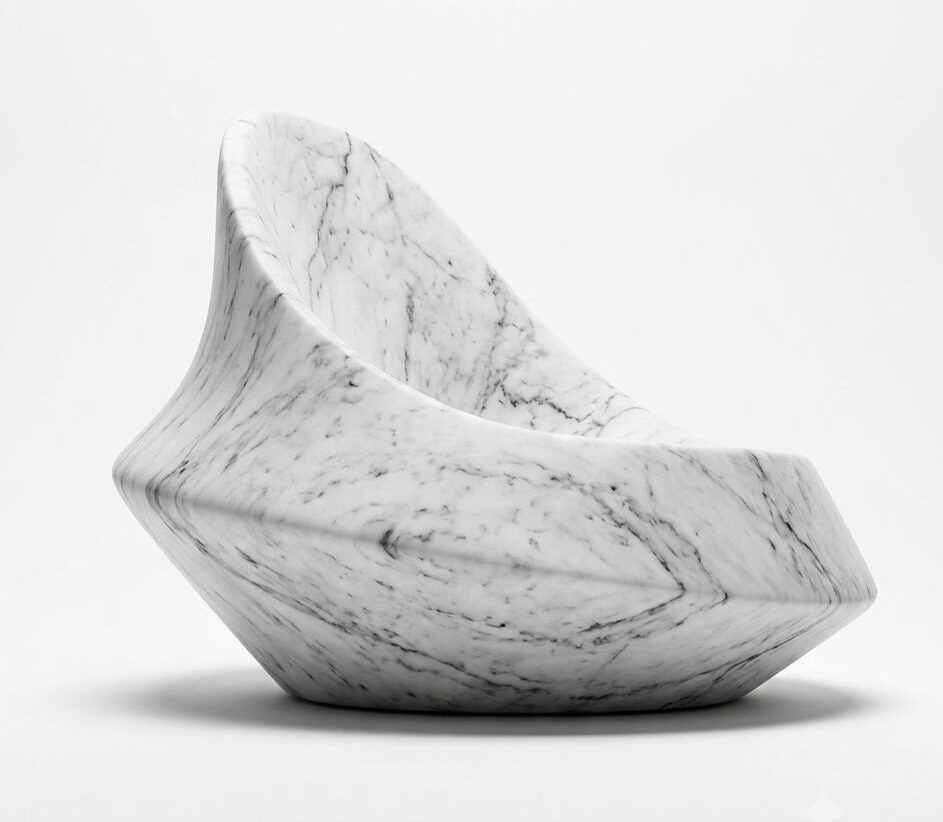
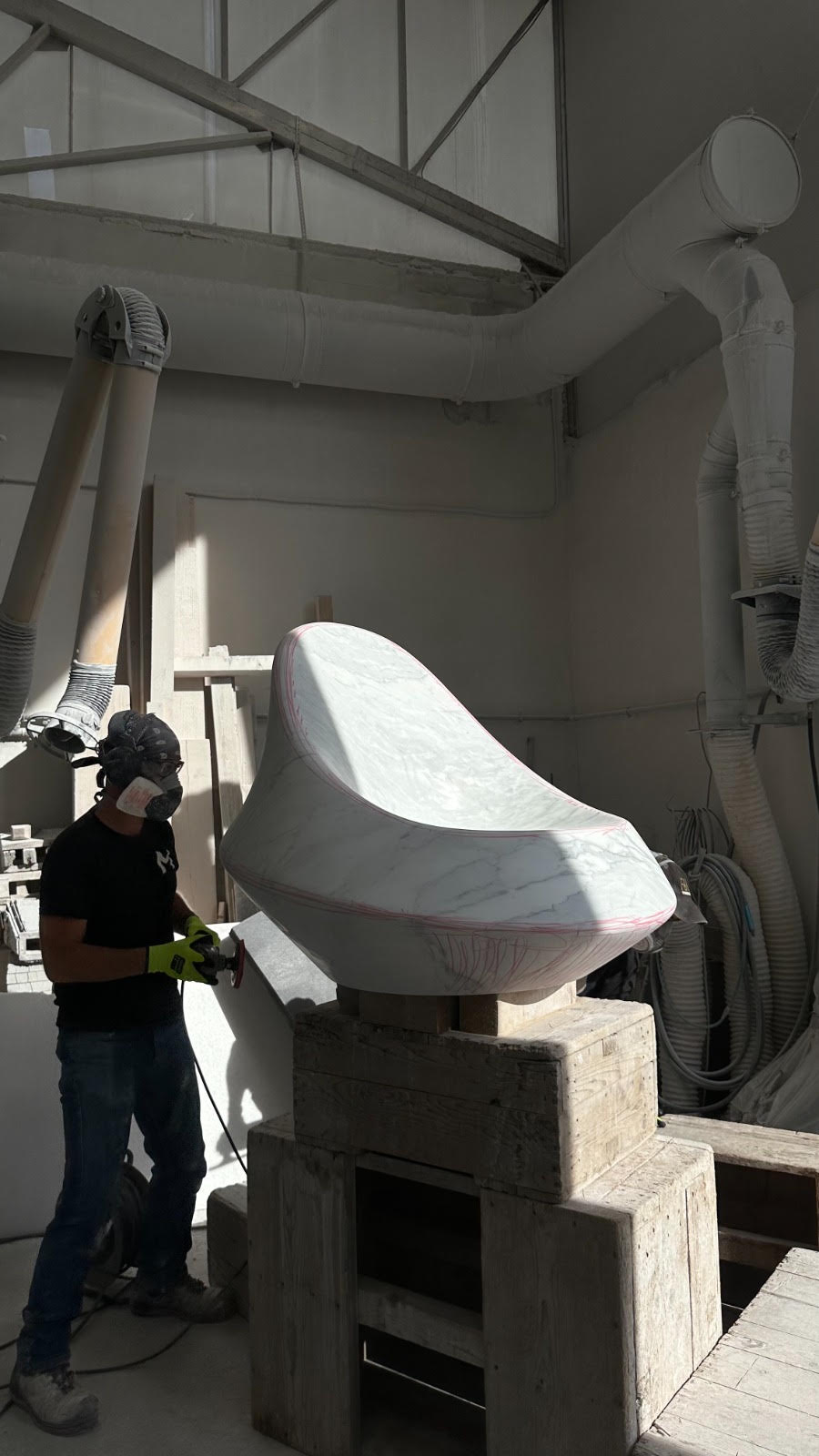
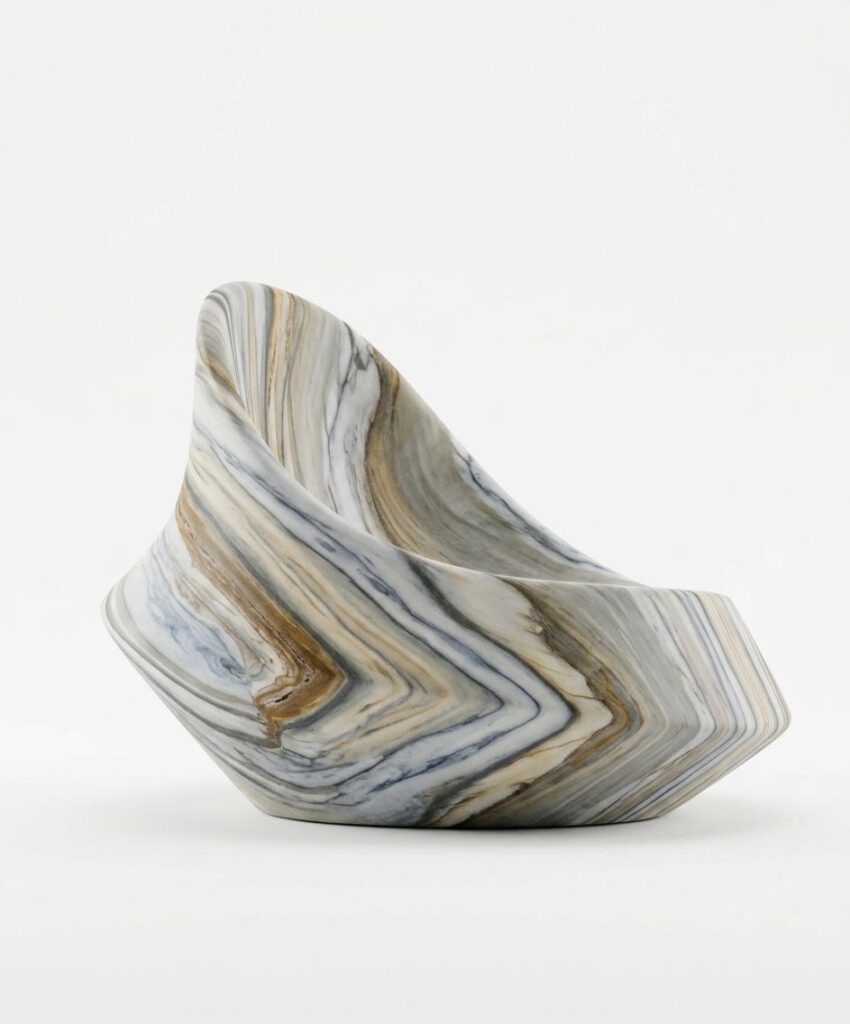
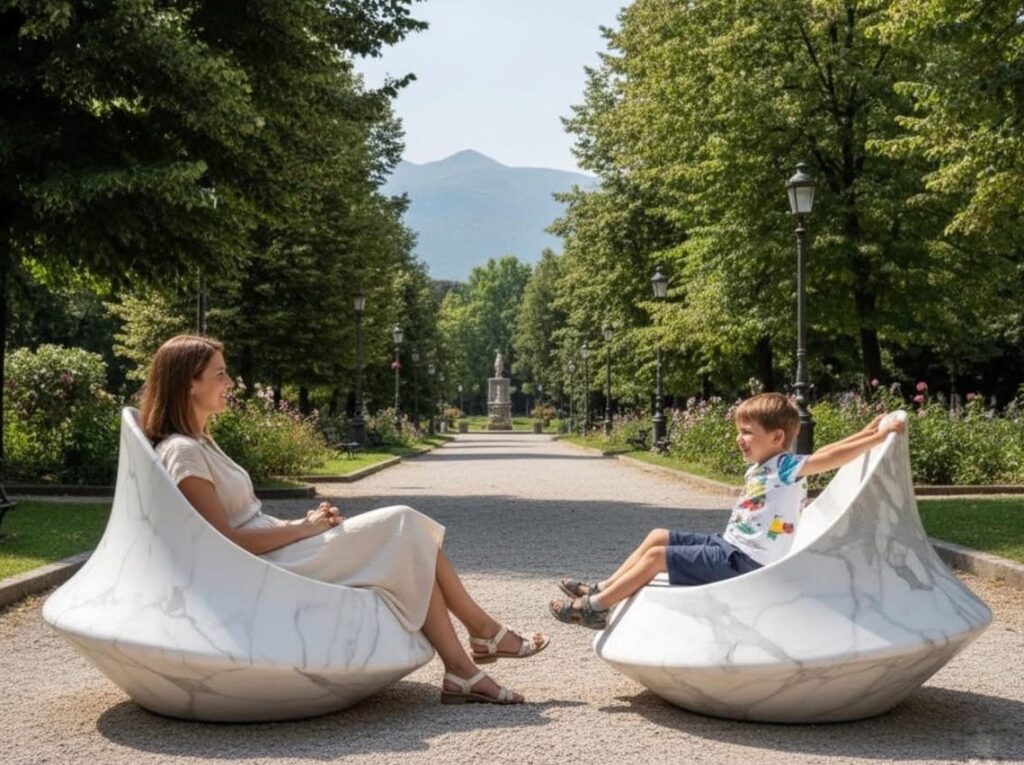
Ho cercato di fare esattamente il contrario di quello che normalmente ci aspettiamo dal marmo. Non volevo combattere la durezza della pietra, ma trasformarla attraverso la forma. Per me l’ergonomia è sempre fondamentale. Progetto sedute e poltrone da molti anni e quindi ho affrontato Agorà con la stessa attenzione che dedico a una poltrona per interni: ho cercato di adattare il corpo della persona al marmo, creando una forma che lo accogliesse. Poi c’è la lavorazione della superficie, che è stata fondamentale. Il marmo è stato levigato talmente tanto che la sensazione al tatto è quasi quella del velluto. È una cosa difficile da raccontare attraverso una fotografia. Bisogna toccarlo. Quando lo sfiori, la percezione cambia completamente: non senti più una pietra fredda e rigida, ma una superficie incredibilmente morbida.
3. Quanto ha influito la forma naturale del corpo umano nello sviluppo della poltrona?
Moltissimo. L’ergonomia non è qualcosa che aggiungo alla fine di un progetto. È parte della forma stessa. Quando progetto una seduta penso sempre a come il corpo arriva, dove si appoggia, come si rilassa e quale posizione assume. In Agorà questa ricerca era ancora più interessante perché dovevo trasferire questa idea nel marmo. Ho cercato quindi di fare in modo che fosse il marmo ad accogliere il corpo. È quasi un paradosso: una materia pesante e solida che deve riuscire a dare una sensazione di morbidezza e comfort. E la risposta che abbiamo avuto con il primo prototipo è stata per me una conferma bellissima. Le persone si sono sedute e la prima cosa che hanno detto è stata che erano sorprendentemente comode.
4. Il progetto nasce prima da un’intuizione estetica oppure dallo studio delle caratteristiche tecniche della pietra?
Per me nasce sempre da una storia. C’è sempre un motivo per cui nasce un progetto. Può essere un pensiero, un gesto, una necessità, una conversazione o anche semplicemente un momento particolare. Nel caso di Agorà c’era prima di tutto il desiderio di creare relazione. Poi arriva la parte tecnica, che per me è altrettanto importante. È il momento in cui l’idea si confronta con la materia e con chi la conosce veramente: gli artigiani, i marmisti, l’azienda. È un processo che conosco bene anche nei miei progetti per il mondo dell’arredo. L’idea deve trovare il modo di diventare reale senza perdere la propria anima.
5. Quale tipo di marmo o pietra naturale è stato utilizzato e perché è stato scelto proprio questo materiale?
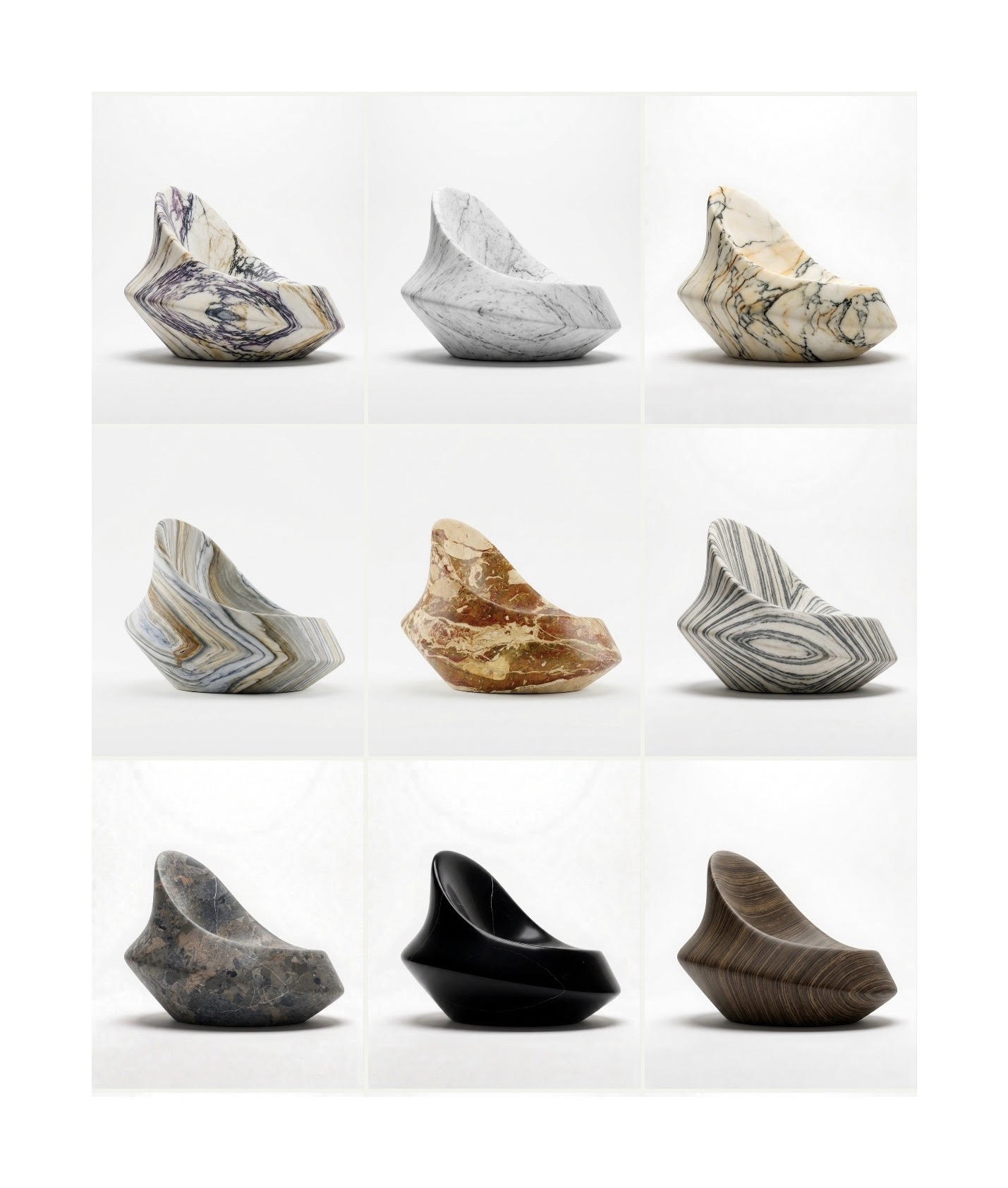
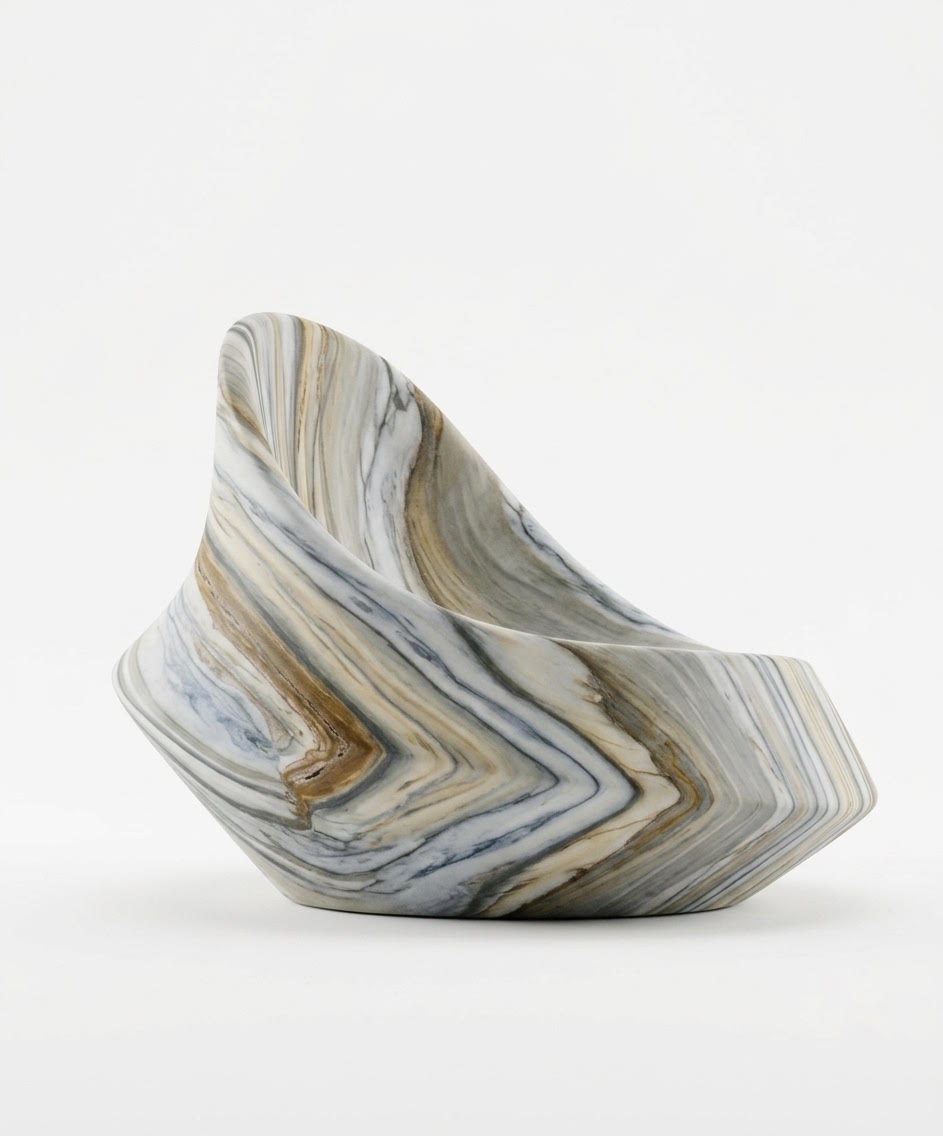
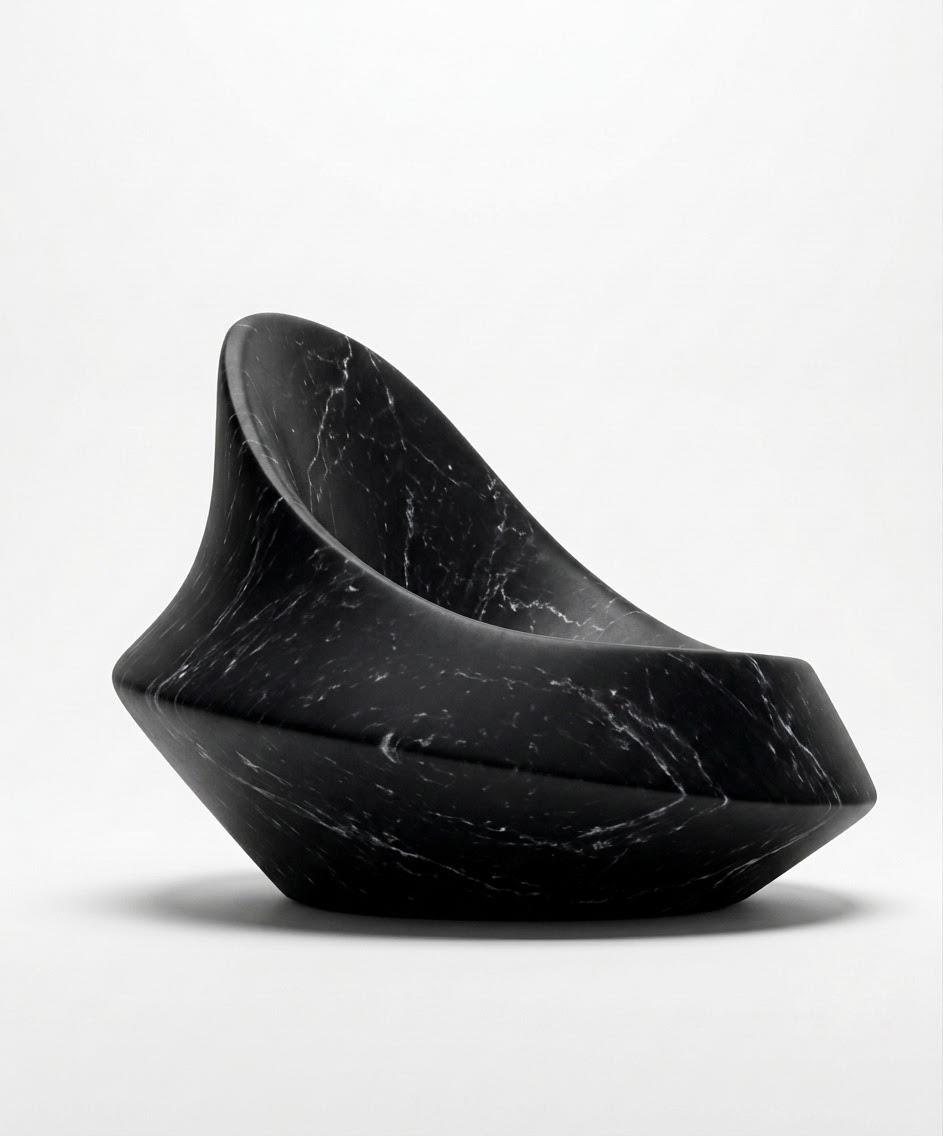
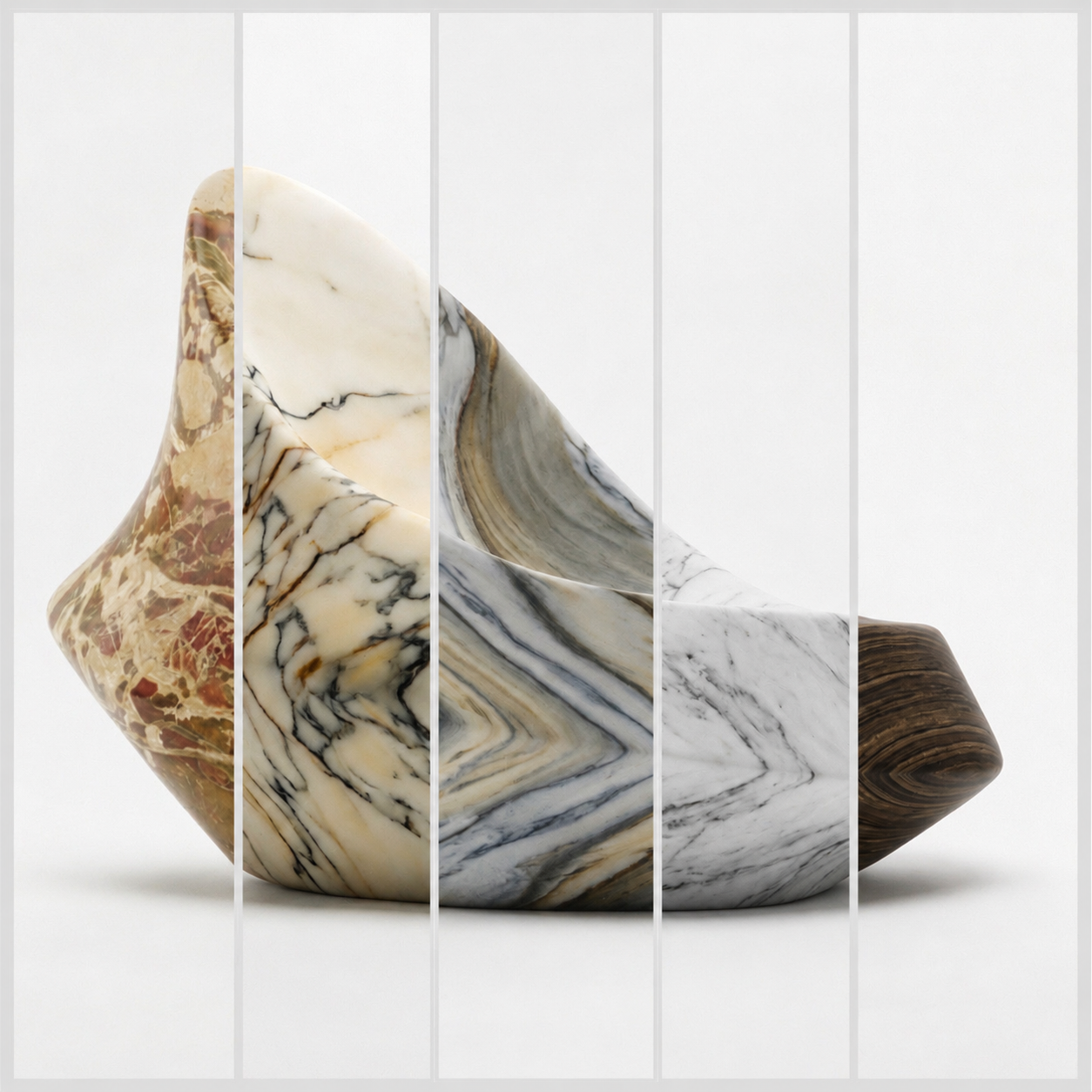
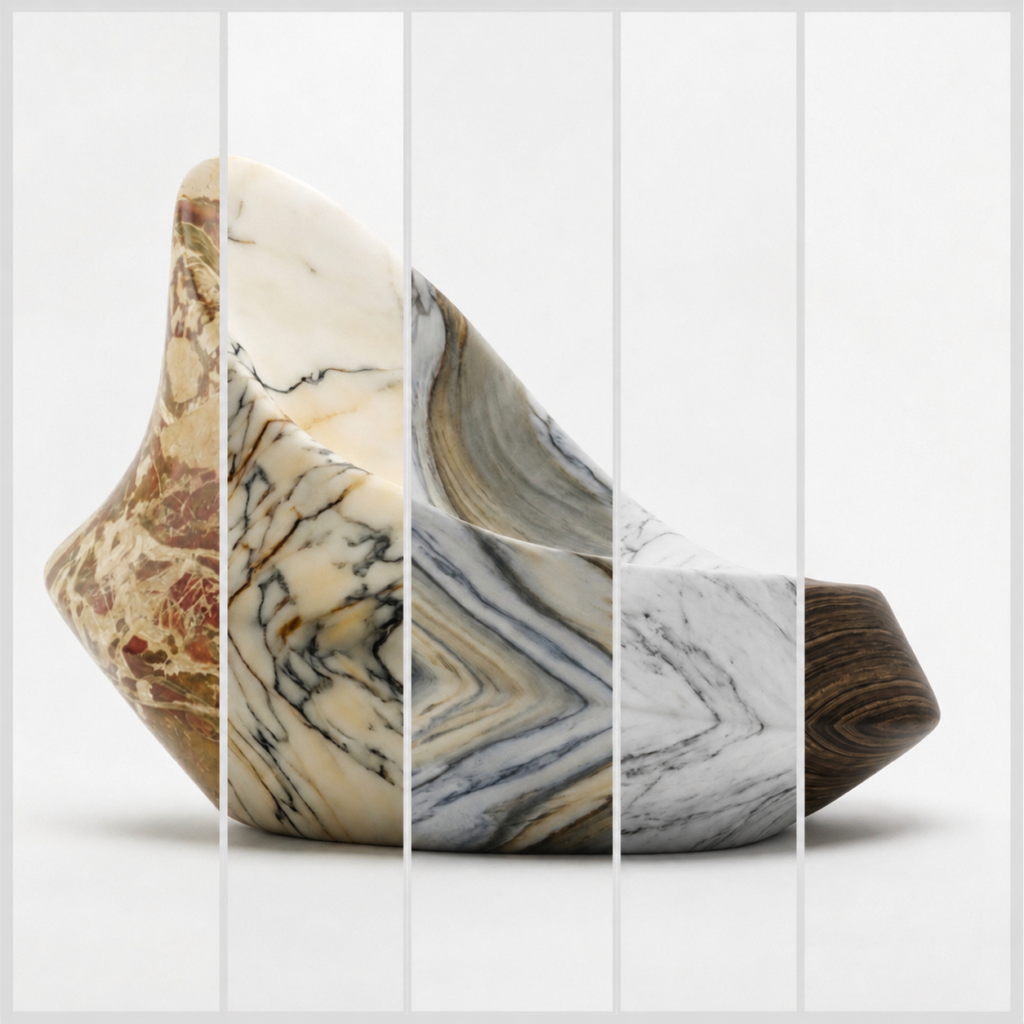
Il progetto nasce dal marmo di Carrara, perché era importante che raccontasse il luogo in cui è nato. Carrara non è semplicemente un luogo dove si estrae marmo. È un territorio in cui la pietra è storia, cultura, lavoro e identità. Per questo volevo riportare il marmo nel cuore della città e farlo vivere in una maniera diversa. Agorà è stata sviluppata con FiammettaV, e insieme abbiamo lavorato affinché il progetto potesse esprimere al meglio proprio questo rapporto tra territorio, materia e design. Ma Agorà non deve necessariamente essere legata a un unico marmo. Se la pietra è tecnicamente adatta a questo tipo di lavorazione e di utilizzo, può essere scelta anche dal cliente. Tra le possibilità che abbiamo considerato ci sono Bianco Carrara, Paonazzo, Zebrino, Diaspro e Ceppo Delicato. Mi piace molto questa possibilità perché ogni pietra ha una propria personalità. La forma rimane la stessa, ma la venatura, il colore e la materia cambiano completamente la percezione dell’oggetto.
6. La poltrona viene ricavata da un unico blocco oppure è composta da più elementi?
L’idea di Agorà è quella di una seduta monolitica. Mi piace molto la forza di un unico volume di marmo, soprattutto perché crea un contrasto con la morbidezza della forma. È una massa importante, ma quando la guardi non deve sembrarti pesante. La forma cerca di togliere alla pietra quella rigidità monumentale che normalmente associamo al marmo e trasformarla in qualcosa di accogliente.
7. Qual è stato il rapporto con gli artigiani, i marmisti e le aziende coinvolte nella sua realizzazione?
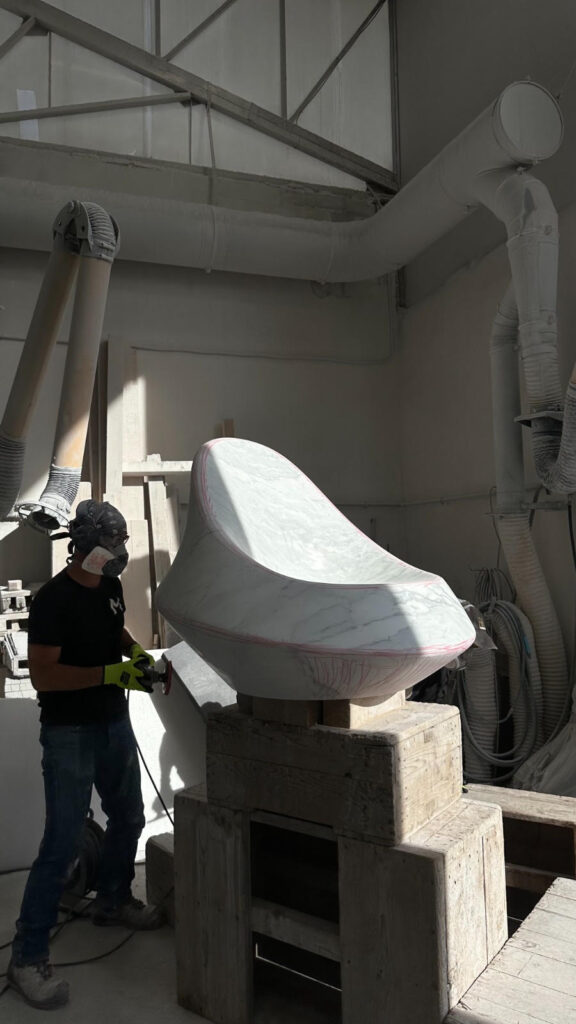
È stato fondamentale. Un progetto come questo non nasce mai dal designer da solo. Il designer porta un’idea, ma poi la materia deve essere interpretata da chi la conosce. Per questo il dialogo con FiammettaV, con gli artigiani e con i marmisti è stato importantissimo. FiammettaV ha avuto un ruolo centrale nel trasformare l’idea in un oggetto reale, mettendo insieme tecnologia, esperienza e conoscenza della materia. Per me è proprio questo dialogo tra creatività, tecnologia e sapere artigianale che rende speciale un progetto.
8. Le nuove tecnologie di lavorazione, come la modellazione digitale e le macchine a controllo numerico, stanno cambiando il modo di progettare il marmo?
Sicuramente. Oggi la tecnologia ci permette di esplorare forme molto complesse con una precisione straordinaria. Ma non credo che la tecnologia debba sostituire l’artigianalità. Al contrario, penso che debba essere uno strumento per permettere all’artigiano e al designer di arrivare più lontano. Il progetto digitale permette di controllare la forma, ma poi la materia ha sempre qualcosa da insegnarti. E il passaggio finale, quello della lavorazione e della finitura, è fondamentale. È lì che un oggetto smette di essere semplicemente un modello e diventa qualcosa che puoi toccare e vivere.
9. Una seduta destinata a una piazza, a un parco o a un luogo collettivo deve rispondere a esigenze diverse rispetto a una poltrona domestica. Quali aspetti hai considerato?
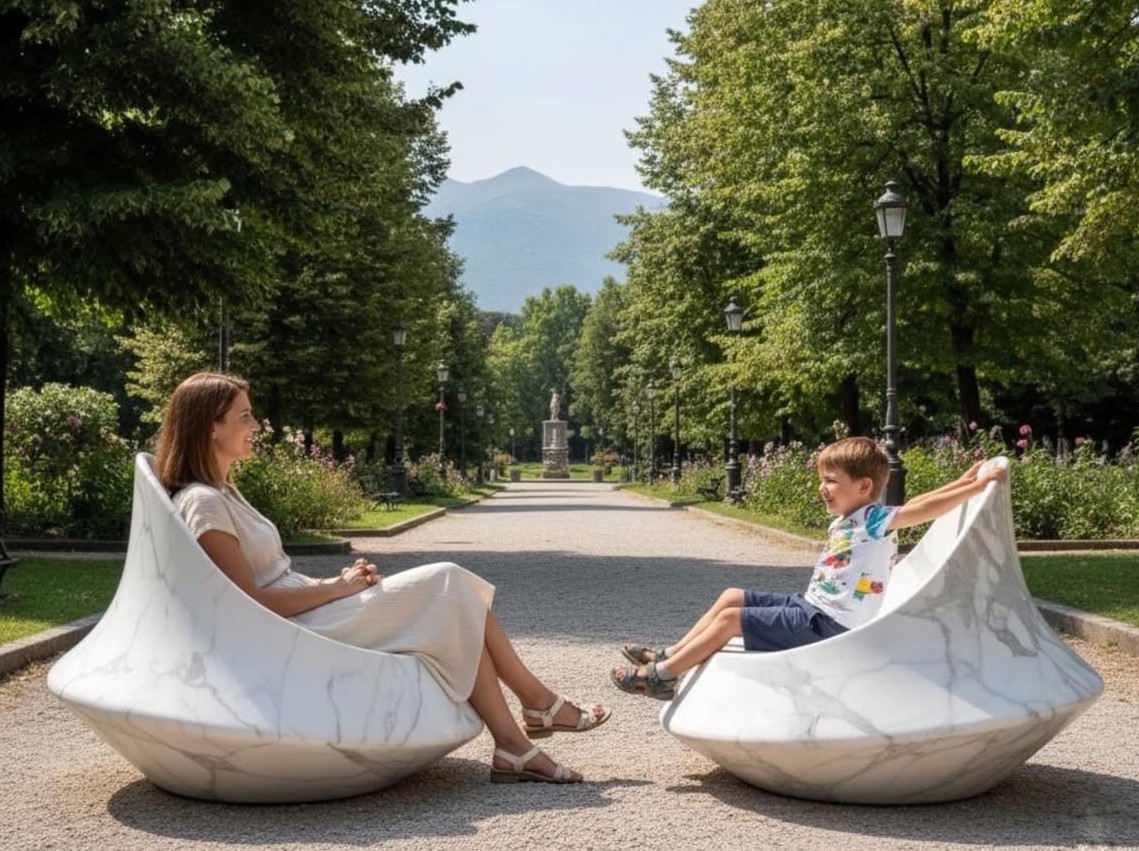
La prima cosa che ho considerato è stata la persona. Anche quando progetto per uno spazio pubblico, penso a chi si siederà. Una persona può rimanere cinque minuti oppure un’ora. Può essere giovane, anziana, alta, bassa, può venire da sola o con altre persone. Per questo ergonomia e comfort sono fondamentali. Ma in Agorà c’è anche un’altra dimensione: non volevo progettare soltanto una seduta, ma una situazione. La poltrona è parte di un cerchio e il cerchio crea una relazione.
10. Hai pensato anche alla resistenza agli agenti atmosferici, alla manutenzione, al drenaggio dell’acqua e all’eventuale surriscaldamento della superficie?
Sì. Quando un progetto nasce per l’esterno, la parte tecnica diventa naturalmente molto importante. La pietra ha caratteristiche di resistenza e durabilità straordinarie, ma ogni scelta deve essere verificata in relazione al contesto, alla finitura e all’utilizzo. Anche aspetti come la gestione dell’acqua, l’esposizione al sole, la manutenzione e la sicurezza devono essere affrontati insieme all’azienda e ai tecnici in funzione dell’installazione. Per me il design deve sempre trovare un equilibrio tra emozione e realtà.
11. La poltrona può essere prodotta in differenti pietre, colori o dimensioni?
Sì. Il progetto nasce con il marmo di Carrara, ma, se la pietra è tecnicamente adatta, può essere scelta dal cliente. Bianco Carrara, Paonazzo, Zebrino, Diaspro e Ceppo Delicato sono alcune delle possibilità. Mi piace l’idea che Agorà possa avere diverse identità senza perdere la propria. La forma rimane riconoscibile, ma ogni pietra porta con sé una storia diversa.
12. In quale tipo di spazio pubblico immagini maggiormente questo progetto: una piazza, un museo, un albergo, un lungolago oppure un giardino?
La piazza è sicuramente il luogo che più rappresenta il concetto di Agorà. Ma la immagino in tutti quei luoghi in cui le persone hanno bisogno di fermarsi: un museo, un albergo, un giardino, uno spazio culturale, una spa, un lungolago, un cortile, una terrazza, in piscina… Ora sono particolarmente felice che due poltroncine saranno in Piazza delle Erbe a Verona durante Marmomac. È una collocazione che per me ha un significato enorme, perché per tanti anni ho abitato proprio a due passi da quella piazza. Ci sono passata migliaia di volte, fa parte dei miei ricordi, della mia vita a Verona. Vedere oggi una mia poltroncina lì, in quello stesso luogo, mi emoziona davvero. È un grande onore. E mi piace anche il significato del viaggio: Agorà nasce a Carrara, dalla montagna e dal marmo, e arriva in una delle piazze più belle e vive di Verona.
13. Molti tuoi lavori sono caratterizzati da forme avvolgenti e da una componente quasi emozionale. Anche in questo progetto la persona rimane il centro del disegno?
Sempre. La persona è il centro del mio modo di progettare. Per me il design è espressione e comunicazione visiva, ma deve essere anche qualcosa che si vive. Funzionalità ed ergonomia sono imprescindibili nei miei progetti. Sono convinta che quando funzionalità, comfort ed estetica trovano un equilibrio, un oggetto possa essere apprezzato nel tempo. In Agorà c’è però qualcosa in più: la persona non è soltanto il centro della seduta, ma è il centro della relazione che la seduta vuole creare.
14. Il marmo è un materiale antichissimo. Come può il design contemporaneo utilizzarlo senza limitarsi a ripetere forme e linguaggi del passato?
Credo che dobbiamo avere il coraggio di usarlo in maniera diversa. Il marmo ha una storia enorme e non dobbiamo dimenticarla. Ma possiamo scrivere nuovi capitoli. Agorà cerca proprio questo: trasformare una materia associata tradizionalmente al monumento in qualcosa di quotidiano. Una pietra da toccare, da utilizzare, sulla quale sedersi. È un modo per passare dal marmo come elemento da guardare al marmo come elemento da vivere.
15. In un momento in cui si parla molto di sostenibilità, quale valore può avere un materiale naturale, durevole e potenzialmente eterno come la pietra?
La durata è una qualità importantissima. Un oggetto progettato per durare nel tempo ha un rapporto completamente diverso con il consumo rispetto a un prodotto pensato per essere sostituito rapidamente. Ma per me c’è anche una sostenibilità culturale. Utilizzare una materia del territorio significa valorizzare il sapere di chi la lavora, le aziende, gli artigiani e una storia che altrimenti rischierebbe di essere percepita soltanto come passato. Agorà vuole rendere questa storia contemporanea.
16. È possibile utilizzare blocchi di recupero, pietre locali o materiali provenienti dagli scarti delle lavorazioni?
È una direzione che trovo molto interessante. Mi affascina l’idea che una materia considerata uno scarto possa acquisire una nuova vita attraverso il progetto. Ogni marmo è diverso. Ha venature, tracce, differenze. Il designer deve anche imparare ad ascoltare queste caratteristiche e a valorizzarle invece di cercare sempre una materia perfettamente uniforme.
17. Marmomac rappresenta uno dei principali appuntamenti internazionali dedicati alla pietra naturale. Che rapporto hai con questa manifestazione e con Verona?
Verona è casa. Sono arrivata in Italia nel 2000 e questa città è stata fondamentale per il mio percorso personale e professionale. Per questo vedere oggi Agorà in Piazza delle Erbe durante Marmomac mi emoziona in modo particolare. È un grande onore vedere questo progetto proprio lì. Per tanti anni ho abitato a due passi da Piazza delle Erbe. Era il luogo della mia quotidianità: ci passavo, incontravo persone, vivevo la città. È anche una delle piazze che amo di più. Oggi pensare che due mie Agorà saranno lì, durante un appuntamento internazionale come Marmomac, mi dà una sensazione bellissima. Un evento che frequento spesso. È come se il progetto tornasse in un luogo che appartiene alla mia storia. E c’è qualcosa di ancora più bello: Agorà è nata a Carrara, grazie a un territorio che vive il marmo ogni giorno, e ora arriva a Verona. Sono due città diverse, ma entrambe legate alla cultura italiana, al lavoro, alla bellezza e alla capacità di trasformare la materia in qualcosa che appartiene alla vita.
18. Pensi che il mondo della pietra sia oggi sufficientemente aperto alla collaborazione con designer e creativi?
Credo che ci sia ancora moltissimo da esplorare. Il marmo ha possibilità enormi e il dialogo con il design può portarlo verso nuovi territori. Ma anche noi designer dobbiamo avere rispetto per la materia. Non possiamo arrivare con un’idea astratta e chiedere alla pietra semplicemente di obbedire. Bisogna ascoltarla. E bisogna ascoltare chi lavora con quella materia ogni giorno. È da questo dialogo che possono nascere cose veramente nuove.
19. Quali sono, secondo te, le applicazioni più interessanti che il marmo potrà avere nei prossimi anni nell’arredamento e negli spazi urbani?
Mi interessa molto l’idea di riportare il marmo nella quotidianità. Non soltanto grandi superfici o monumenti, ma sedute, elementi urbani, illuminazione, complementi e oggetti che le persone possano toccare e utilizzare. Vorrei vedere sempre più il marmo come un materiale da vivere. Agorà nasce proprio da questo desiderio: trasformare il marmo da icona statica a elemento vivo della città.
20. Sei nata in Spagna ma lavori da molti anni in Italia. Quanto convivono nei tuoi progetti la cultura mediterranea spagnola e la tradizione del design italiano?
Sono due parti di me che convivono naturalmente. Sono nata ad Alicante e mi sono formata tra Alicante e Valencia. La mia cultura mediterranea fa parte di me: la luce, il mare, la famiglia, il modo di vivere gli spazi e le relazioni. Poi sono arrivata in Italia e qui ho costruito gran parte della mia vita professionale. L’Italia mi ha insegnato moltissimo sulla cultura del progetto, sulla qualità, sull’artigianato e sul rapporto tra design e industria. Non cerco però di dividere le due culture. Sono semplicemente parte di quello che sono.
21. Nel tuo percorso hai progettato sedute, tavoli, complementi e collezioni per diverse aziende. Qual è il filo conduttore che unisce lavori apparentemente molto differenti?
La persona e la storia. Non mi interessa disegnare un oggetto semplicemente perché è bello o perché segue una tendenza. C’è sempre una ragione per cui nasce. A volte è un pensiero, un gesto, una richiesta, un modellino, una conversazione. Poi arriva la parte tecnica, che per me è fondamentale: seguire ogni dettaglio, verificare ergonomia, qualità e comfort. Le forme possono cambiare completamente da un progetto all’altro, ma il filo conduttore rimane quello. Cerco sempre di creare qualcosa che sia semplice, autentico e capace di trasmettere un’emozione.
22. Il design è anche espressione, comunicazione visiva e linguaggio estetico. Quale emozione vorresti suscitare in chi si siede su questa poltrona?
Vorrei innanzitutto che si sentisse bene. E poi vorrei sorprenderlo. Vorrei che toccasse il marmo e pensasse: “È davvero marmo?” Vorrei che sentisse la superficie vellutata, che scoprisse la forma con il corpo e che si rilassasse. Ma soprattutto vorrei che succedesse qualcosa tra le persone. Che qualcuno si sedesse e iniziasse a parlare con la persona accanto. Se Agorà riesce a far nascere anche una sola conversazione tra due sconosciuti, per me ha già raggiunto il suo scopo.
23. A quale nuovo progetto stai lavorando e quali saranno le prossime occasioni per vedere le tue creazioni?
Ci sono sempre nuove idee nella mia testa e nuovi progetti presentati alle aziende, in attesa di una risposta. La parte che mi motiva di più è proprio progettare qualcosa che ancora non esiste. Non è facile, perché bisogna immaginare una forma prima che diventi reale, ma è anche la parte più bella del nostro lavoro. Agorà, in questo senso, per me non è soltanto un progetto concluso. È l’inizio di una riflessione più ampia sul rapporto tra design, materia e spazio pubblico. Mi interessa capire sempre di più come un oggetto possa fare qualcosa oltre a occupare uno spazio: possa generare relazioni. Parallelamente continuo a lavorare a nuovi progetti e nuove collezioni per le aziende con cui collaboro. Le prossime occasioni per vedere alcune delle mie creazioni saranno High Point Market, in North Carolina, a ottobre, e Interihotel Madrid, a novembre. Sono appuntamenti molto diversi tra loro, ma rappresentano bene il mio modo di lavorare: continuare a esplorare, confrontarmi con aziende e professionisti internazionali e cercare sempre nuove possibilità attraverso il design.
Dopo tanti anni trascorsi in Italia, che cosa rappresentano oggi Verona e il suo territorio nella tua vita personale e professionale?
Verona è casa. Sono arrivata in Italia nel 2000 pensando forse che sarebbe stata una parentesi. La vita ha deciso diversamente. Qui ho costruito una parte fondamentale della mia vita, ho incontrato aziende, persone, amici, artigiani e professionisti che hanno contribuito alla mia crescita. Per tanti anni ho abitato proprio a due passi da Piazza delle Erbe. Per questo oggi vedere Agorà lì ha per me un significato che va molto oltre il design. È un onore. È emozionante pensare che una poltroncina che ho progettato possa trovarsi proprio in una piazza che ho vissuto così tanto, una piazza che appartiene ai miei ricordi e alla mia storia personale. Dal 2013 vivo a Borghetto sul Mincio, ma Verona rimane una parte importantissima della mia vita. E poi ci sono le mie radici spagnole. Il mio cuore è ancora molto legato alla Spagna, alla mia famiglia, al Mediterraneo. Credo che vivere tra queste due culture abbia arricchito profondamente il mio modo di disegnare. Forse è proprio per questo che Agorà mi rappresenta così tanto. È nata a Carrara, dalla montagna, dalla pietra e dalle persone che lavorano quella materia. E ora arriva a Verona, in una piazza che per me è casa. È come un piccolo cerchio che si chiude. Ma, allo stesso tempo, è un nuovo cerchio che si apre. Perché l’idea di Agorà è proprio questa: creare un luogo dove le persone possano incontrarsi. Alla fine, sia nella vita sia nel design, credo sia meglio non competere con nessuno: esprimere quello che sentiamo e dare il massimo di noi stessi. Per me il design è questo. È creare qualcosa che abbia un’anima, che faccia stare bene le persone e che, magari, riesca anche a metterle in relazione. Perché, per me, disegnare è vivere.